
CFDA-NMPA product registration in China: cosmetics, food supplements and medical devices
To sell a cosmetic, a food supplement, a food product or a medical device legally in China you need a prior registration or notification with the competent authority, in most cases the NMPA (National Medical Products Administration, the former CFDA). OCCHE prepares the dossier, acts as or appoints the responsible agent in China and follows the file through to authorisation.
From CFDA to NMPA: who regulates what
In 2018 the China Food and Drug Administration (CFDA) was reorganised. Cosmetics, medicines and medical devices moved to the NMPA, which sits under the State Administration for Market Regulation (SAMR). Food and food supplements (保健食品, health food) remained under the SAMR, with Chinese Customs (GACC) responsible for registering foreign manufacturers and for border controls. Many companies still search for CFDA registration: today the procedure is NMPA or SAMR depending on the product, and OCCHE's first task is to classify yours correctly.
Cosmetics: registration and notification under the CSAR
The CSAR (Cosmetics Supervision and Administration Regulation), in force since 1 January 2021, distinguishes two routes:
- General cosmetics (facial and body care, make-up, perfumes, shampoos): notification (备案) with the NMPA before import.
- Special cosmetics (hair dyes, perms, whitening and anti-spot products, sunscreens, anti-hair-loss products and products with new efficacy claims): registration (注册) with prior assessment by the NMPA.
In both cases the dossier includes the full formula with percentages, the manufacturing process, the safety assessment report, the efficacy tests supporting each claim, the certificate of free sale and good manufacturing practice from the country of origin, and the Chinese labelling. New cosmetic ingredients have their own procedure. OCCHE coordinates testing at recognised laboratories in China and reviews the claims on your original label before translating them: a routine claim in Europe can turn a general product into a special one in China.
The responsible agent in China
Every foreign company that registers or notifies a cosmetic must appoint a domestic responsible person (境内责任人): a Chinese entity that files the dossier, answers to the NMPA for the quality and safety of the product and manages post-market surveillance. Choosing this agent well is decisive: the registration is tied to them. OCCHE can act as responsible agent through its structure in Qingdao or help you appoint your own distributor or subsidiary, with contracts that protect your ownership of the registrations.
Food supplements and food
Food supplements with health claims are treated as health food (保健食品) and require registration or notification with the SAMR depending on their ingredients, with testing and a demanding technical dossier. Many brands choose to enter first as ordinary food or through the cross-border channel, which allows sales to the end consumer without that registration under certain conditions; OCCHE explains the advantages and limits of each route.
For food, the foreign manufacturer must be registered with Chinese Customs (GACC), the product must comply with the national food safety standards (GB) and the Chinese label must be approved before import. Certain categories (meat, dairy, seafood, honey) also require the country and the establishment to be authorised.
Medical devices
Medical devices are classified into three risk classes. Class I is notified and classes II and III are registered with the NMPA, with technical testing at recognised Chinese laboratories, clinical evaluation (or a justified exemption), a quality system and an appointed agent in China representing the manufacturer. We manage the classification, the dossier, the testing and the relationship with the NMPA.
Dossier, testing, labelling and timelines
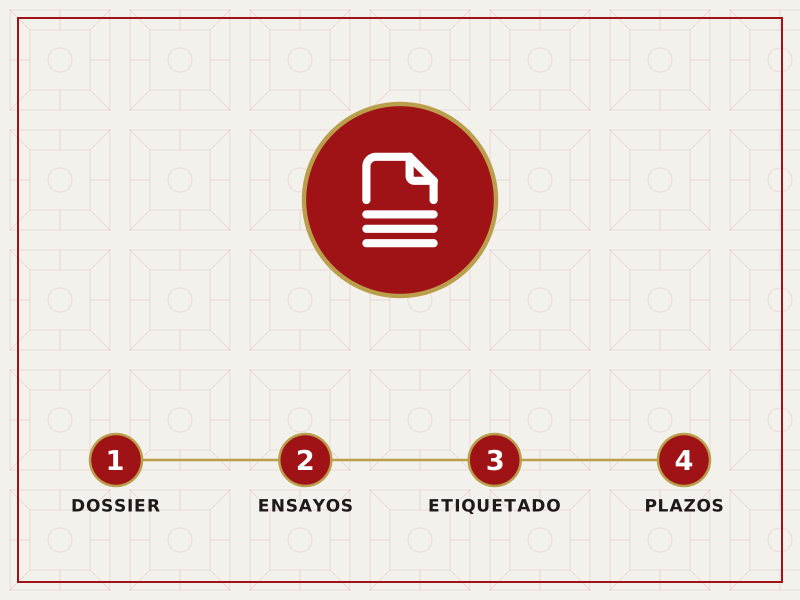
Our work covers the whole file: product classification, review of the formula or composition against the lists of permitted and restricted ingredients, legalisation and sworn translation of certificates, coordination of testing, drafting of the Chinese label, online filing and responses to the authority's requests. Timelines vary widely depending on the route: a general cosmetic notification can be completed in weeks once the tests are in hand, while registrations for special cosmetics, health food and class II and III medical devices are measured in months or more. In our proposal we set out the calendar and the testing costs for your specific product.
Frequently asked questions
Does CFDA registration still exist in China?
The CFDA was reorganised in 2018. Today cosmetics, medicines and medical devices are registered or notified with the NMPA, and food and food supplements fall under the SAMR and Customs (GACC). What many companies call CFDA registration is now an NMPA registration or notification.
What is the difference between notification and registration of a cosmetic in China?
Notification applies to general cosmetics and allows import once the complete dossier has been filed. Registration applies to special cosmetics (sunscreens, whitening products, hair dyes, anti-hair-loss products, among others) and requires prior assessment by the NMPA before authorisation.
Do I need a responsible agent in China to register my cosmetics?
Yes. Every foreign company must appoint a domestic responsible person who files the dossier and answers to the NMPA. OCCHE can take on that role or help you appoint your subsidiary or distributor with the appropriate contractual safeguards.
How long does NMPA registration of a cosmetic take?
A general cosmetic notification can be completed in weeks once the tests and legalised documentation are in hand. Registrations for special cosmetics are measured in months. The actual time depends mainly on the testing and the quality of the dossier.
I want to register my product in China
Request a quote HERE